Skip to content

Posts from the ‘wellness’ Category

Who Wants to Be a Wellness Intrapreneur? Part V: Knowing When to Turn Your Own Page

PART V

Knowing When to Turn Your Own Page 

“I’m afraid that if you look at a thing long enough, it loses all of its meaning.”

– Andy Warhol

Elvis Presley and Mickey Mantle were mythic-like folk heroes to a generation of kids growing up in the 1950s. Girls thought these boys were cute and boys wanted to be just like them. What Elvis was to rock ‘n’ roll, Mickey was to baseball. Problem was, they both stayed too long.

If you question this, checkout a photo of Elvis from his 1968 “Comeback” concert and then pull a photo from one of his last Vegas performances in 1977.  He stayed too long.  As for The Mick, his last season as a Yankee was his worst in his 18-year career.  That season, 1968, he hit .237, had 54 runs batted in and 18 homers.  A far cry from his 1956 Triple Crown season.  That year he hit .353 with 130 RBIs and 52 round trippers.  That last miserable year brought his lifetime batting average down below .300 (.298).  He took that regret to his grave.  He stayed too long.

Same could be said for Strom Thurmond, Judy Garland, Woody Hayes, Hosni Mubarak, Gloria Swanson’s character in “Sunset Boulevard,” Fidel Castro and scores of other modern era once-upon-a-time icons and mythical heroes.

As in the world of sports, politics and entertainment, intrapreneurs (entrepreneurs, too) have—or should have—a shelf life.  The attitude and skill set needed to make something from nothing—the conception, birth and infancy stages of a company—rarely carry through into adolescence and adulthood.  Where brashness, uber-confidence, risk and a dash of hubris serve the intrapreneur well, these same characteristics can become their undoing once a company or new product line gets established and settles into steady growth.  There are exceptions but they are rare.  For every Steve Jobs or Bill Gates there are hundreds of dot-comers who stayed too long.  The problem is it’s hard to let go.  While others seek shelter and security, the Type T intrapreneur/ entrepreneur relishes the feel of rain on his or her face, basks in the glow of lightning and hears thunder as applause.  “Bring it On” reads the family crest.

The passion that fuels this rebel-maverick-outlier is a mix of thrill seeking and risk taking.  Initially, this curious blend of Joan of Arc and Robin of Loxley—two mythical heroes from days of yore—appears charming and, even if a bit eccentric and unconventional, offers hope and promise for a better day, at least to those who recruited the would-be savior.

The troubles begin, however, when the major campaign battles end and the dust begins to settle.  Joan and Robin live for the cause and perform at their best—and are happiest—when excitement reigns and chaos hovers.  As a result, once the settling stage begins, they often itch for new adventure (think the Lone Ranger) and start looking to new horizons.  Good thing, too, because in the eyes of the longtime resident, the aura begins to fade, Joan’s shiny armor starts to dull, and Robin’s tights look more silly than dashing.  For the good of everyone, it’s time to move on.  It’s time to turn the page.

You Know It’s Time to Turn the Page When …         

  • Your ideas run the full reaction cycle of ignored-quirky-brilliant-quirky-ignored.
  • Instead of stoking the fire in your belly, you reach for more Tums.
  • The tone changes from hair-raising excitement to hair-pulling frustration.
  • You want to take a nap at 2:00 in the afternoon.
  • Colleagues no longer steal your ideas (use without attribution).
  • You hope your security badge no longer works.
  • Your security badge no longer works.
  • You look like Elvis, walk with Mickey’s arthritic knees, feel the heat of Joan’s embers and see the glint of the friar’s blade.

________

NOTE:  This has been just a quick sketch of what it’s like to be an outlier–anomaly–early advocate–business pioneer in this field.  As stated earlier, I wouldn’t trade my entrepreneurial and intrapreneurial experiences for anything.  It has truly been, and continues to be, a fantastic wellness journey.  I am truly blessed.  For close to forty years I have made a very good living blending mission and margin.  Very nice, indeed.

I am also grateful for the advice, lessons, arguments, insights, disagreements, jousting and camaraderie shared with my wellness and health promotion colleagues.  The list of names below is in no way a fully inclusive list of founding brothers and sisters who traveled the entrepreneur/intrapreneur roads in this field.  It is simply a list of people, with at least 20 years of field experience … some with 30+ years (call them “chronologically superior”) that I have had the honor of sharing the dais and interacting with closely at some point over the past thirty-five years.

“You and I have memories longer than the road that stretches out ahead.”

 –               Paul McCartney

Don Ziegler

Don Powell

Michael O’Donnell

Don Ardell

Ken Pelletier

Walter Elias

Marc Manley

Jonathon Fielding

Tom Connellan

Bert Yaffe

Neil Sofian

Karen Behnke

George Pfeiffer

Phil Haberstro

Dee Edington

Vic Stretcher

Kathy Wieland

Larry Chapman

William Baun

Wendy Bigelow

Don Kemper

Scott Young

John Pinney

Dean Witherspoon

Tracy Orleans

Ken Warner

Ted Dacko

Ron Goetzel

Fern Carness

Bobbie Schwartz

Wendell Haight

Bill Whitmer

William Kizer

Bill Waters

Jeff Johnson

Howie Halperin

Rebecca  Dorn

Lisa Henning

Dan Johnson

Kerry Juhl

Jack Bastable

Dan McDonough

Chris Breuleux

Dave Bulger

Bill Dukes

Mark Converse

Pat Nolan

David Hunnicutt

John Harris

Cheryl Larson

Willis Goldbeck

Mary Longe

Michael Mulvihill

Jim Prochaska

Brian Luke Seward

John Riedel

Karl Fagerstrom

Peter Roberts

Seth Serxner

Eve Stern

Oscar Sasson

Emilie Tierney

Sandra Wendel

Jeff Benske

Barry Bieder


Who Wants to Be an Intrapreneur? Part IV: When the Intrapreneur’s Boon is Rejected

in-tra-pre-neur (In¹tre-pre-nur) n. A person within a large corporation who takes direct responsibility for turning an idea into a profitable finished product through assertive risk-taking and innovation [intra(corporate) + (ENTRE)PRENEUR.] -inftrapre-nouri-al adj. -intra-pre-neuri-al-ism n. -in’trapre-neuri-al-ly adv.

Position Statement:

To survive and thrive, an intrapreneur must learn the fine art of…

  • adapting without assimilating
  • maintaining a cutting edge without getting cut
  • irritating and innovating without alienating key Influentials and check signers
  • thinking like a CFO without losing the dreams and passion of a visionary
  • nurturing passion, dedication and caring without attaching
  • respecting history & tradition without sacrificing his/her “Beginner’s Mind”
  • bowing out before getting thrown out

______________________________________________________

PART IV

When the Boon is Rejected:  Maintain Authenticity

The reoccurring storyline tells the tale of the hero who awakens one day to the call of adventure. More than an invitation, it is closer in power to a Siren’s song without necessarily the classic torn sails, broken mast and floating splinters.

His rational mind and his emotional being play tug-of-war but, in the end, as often is the case, personal emotion trumps collective reason.  He goes in search of the grail knowing that, as Joseph Campbell reminds us, there is no security and there are no rules.

On the journey, our hero encounters tests, allies and enemies.  And, with the aid of a wise mentor, and a writer who knows what Hollywood wants, he conquers all adversity, captures the flag, and sets off back to the village (perhaps even with the once-deadly-but-now-tamed Siren) to share the boon, the prize, the newly found wisdom.

All live happily ever after. Fade to black.

Okay.  Fine.  But there are times when you, the intrapreneur or entrepreneur—the anointed savior—discover that the boon, the prize, the newly found wisdom you’re introducing to the organization is rejected. No matter the treasure, it is still disruptive in a world that knows not, or little, of its existence or value.  Truth and authenticity are threatening in a world of shifting facade.  What you may view as “The Answer” may well be viewed by others, particularly those previously charged with your task, or hoping to have your position, as the newest problem to be dealt with, swiftly.

When you are the hero and this happens to you, you have a few options (but, there’s only one choice).

  • Grab Your Booty and Run (all meanings apply). Resolve that they are fools not worthy of your treasure.  Saddle up for new horizons confident in the delusion that others elsewhere will readily value what you have to offer.
  • Spin and Repurpose the Treasure to Meet the Needs of the Village Elders. With this option, you have tempered your optimism and watered down the strength of your beliefs.  You have compromised values, ethics, morals, and sensibilities in exchange for acceptance and security.  You have both created and assimilated into an unauthentic system.  Shame on you.
  • Slow Down and Allow Others to Catch Up. – Kaizen. Without compromise or dilution, break the treasure down into manageable bite-sized pieces and strategically show value to those in a position to harvest and distribute the full treasure.

Coming Up …

PART V:        Time’s Up:  Knowing When to Turn Your Own Page

Who Wants to Be a Wellness Intrapreneur? Part III: Entrepreneur (Owner) vs. Intrapreneur (Custodian)

Position Statement:

To survive and thrive, an intrapreneur must learn the fine art of…

  • adapting without assimilating
  • maintaining a cutting edge without getting cut
  • irritating and innovating without alienating key influentials and check signers
  • thinking like a CFO without losing the dreams and passion of a visionary
  • nurturing passion, dedication and caring without attaching
  • respecting history & tradition without sacrificing his/her “Beginner’s Mind”
  • bowing out before getting thrown out

_______________________________________________

PART III

 Entrepreneur (Owner) vs. Intrapreneur (Custodian)


in-tra-pre-neur (In¹tre-pre-nur) n. A person within a large corporation who takes direct responsibility for turning an idea into a profitable finished product through assertive risk-taking and innovation

en-tre-pre-neur (En¹tre-pre-nur) n. A person who takes direct responsibility for turning an idea into a profitable finished product through assertive risk-taking and innovation

While there is only a four-word difference in the two definitions, those four words change everything. Having been both a successful entrepreneur and a successful intrapreneur, I can tell you, first hand, that the challenges, joys, barriers, fears, frustrations and hair-pulling (or hair loss) are equal but separate.

Life as a Wellness Entrepreneur 

Yes!  I am my own boss. Nobody can overrule me, intimidate me, tell me what time to get up, what car to drive, whether to shave or not, or how to dress.  Yes, I am free!  If I want my logo to be a lion in the meadow, or a soaring hawk, or a flowering peach tree, it’s mine! Hot damn!

  • “I’m sorry, what?  The bank called and they want to discuss my request for an increase on my line of credit?  Sure, okay.” 
  • “They want what?  More collateral and someone to co-sign on the current loan?   They said something about this being a good time to refinance the house?  Well, okay, I get it, they’ve got skin in the game, they are at risk too, so we can talk.” 
  • “What’s that?  The advisory board wants to discuss my revenue projections for Q3, they think they’re a bit ambitious?  What time?  Their office, this Thursday at 3:00?  Yes, I guess that works.”
  • “Health insurance for the family just shot up to 13K a year? Swell.”
  • “Looks like we will be a little short this month so I shouldn’t count on a paycheck, just yet, maybe next quarter?” 
  • “My biggest angel investor has a nephew who just graduated from Michigan State and he thinks he would be great as my sales guy?  Well, of course I’ll consider it.”
  • “What’s that you say?  Remember this is Michigan.  And it might be smart to drive the Chrysler to the meeting with the UAW and leave the BMW parked in the garage?  Sure, I get it.”
  • “Ajax just called and we got the deal?  Looks like there will be a payday after all!  Hot damn!”
  • “I’m sorry?  You think it would be a good idea if I shaved off the beard, got a haircut and wore a suit for the meeting?
  • “My logo of the soaring hawk landing on a lion in a peach tree orchard is going to cost me WHAT to register?”
  • “WTF…?”

Life as a Wellness Intrapreneur

Yea! No more sweating to make ends meet, no more borrowing from Peter to pay Paul.  No more scraping and bowing down to irritating and irritated investors who could care less about my art and are just interested in making money off my efforts!  No more wolves in bankers’ clothing beating down my door!  Finally, a steady salary with benefits including matching contributions to my 401k and … drum roll, please … HEALTH INSURANCE, including vision and dental!  Yea, I’m free!  Security at last!  Hot damn!

  • “Suit and tie except for Casual Fridays and designated ‘Jeans Day?’  No problem.  What’s that?  Sometimes when the Red Sox or Patriots win we can also wear our jeans?  Well, how about that, sports fans?”
  • “Finance just rejected my PO request for Sally’s new graphics software?  Huh?  I thought I had complete control over my budget?”
  • “What do you mean I have to go through HR if I want Fred to interview for the job?  I’ve known Fred and his work for years, he’s perfect for this position!  At least three candidates plus an internal posting?  What does that even mean?”
  • “A bonus check! That’s great!”
  • “What did he say?”  He said, ‘You act like you own the company.  You don’t own the company, you’re the custodian.’  Yep, that’s what he said.”
  • “What’s that? The parent CFO wants to discuss my revenue projections for Q3, she thinks they’re too low and my expenses are too high?    What time?  Her office, this Thursday at 3:00?    Yes, I guess that works.”
  • “Yes, I had lunch with Sarah Williams? Yes, I did know that she’s a member of the state legislature but, no, I didn’t know that having lunch with her could jeopardize a deal that another division is trying to close.”
  • “I can wear running shoes on ‘Jeans Day’ but I can’t wear sandals?  Is that right? Policy? Huh.”
  • “Looks like a raise is coming up!  And a cost of living adjustment, too?  Wow!”
  • “Okay, let me get this right.  Because he is a client, I can’t accept an offer to play golf with Sam at his club unless I pay full green fees and pay for my own food and drink?  Might look bad?  By the way, what’s an annual COI statement?”
  • “What do you mean I can’t sell my products to Gleason Company unless and until they make Blue Cross their primary vendor for employee health insurance?  How am I supposed to make my target numbers if I can’t sell my wellness products?”
  • “One of the board members has a nephew who just graduated from the University of Vermont and he’s interested in a career in health promotion?  Well, of course, I’ll consider him.”
  • “Rumor?  What rumor?  The rumor that we will be gone by the end of the year if we don’t meet our numbers? The rumor that the new CFO isn’t keen on wellness and we will be part of budget cuts?  The rumor that our division will be folded back into medical services?  The rumor that, due to our success, Stan from corporate sales has a growing interest in health and wellness and is looking to move me out and take over?  Those rumors?  Oh, sure, I hear those rumors all the time!”
  • “WTF?”

The above is based on actual experience with very few adjustments.  Both depictions capture some of the challenges and opportunities in being an entrepreneur and an intrapreneur (I’ve been both).  There are many more of each, of course, but you get the idea.

Which life did I prefer?  Both.  When I was scraping for nickels trying to build a company, I had some of the greatest times of my professional life.  Each day, it seems, was equal parts fear and joy. Very little middle ground.  However, in the end, the sum game for me as an entrepreneur was very positive.  I wouldn’t go back and change anything … well, maybe a few things.

As for the corporate life at Blue Cross as an intrapreneur?  I had some of the greatest times of my professional life.  It was great, trying, invigorating, baffling, educational, enlightening, financially rewarding and very stressful—mostly eustress but plenty of distress, as well.  In the end, the sum game for me as an intrapreneur was very positive.  I wouldn’t go back and change anything … well, maybe a few things.

“During his tenure at the Health & Wellness Institute Michael led a dynamic organization that successfully created awareness and advocacy for health & wellness.  Since its founding in 2007, HWI has been profitable every year.  Our thanks go to Michael for directing us all toward a future of better health.  On a personal note, I’d like to thank Michael for his steady support, energy, enthusiasm, and expertise.  Michael, you’ve made Blue Cross a better place.”

—Jim Purcell, Former President and CEO, Blue Cross & Blue Shield of Rhode Island

Coming Up …

PART IV:                  When the Boon is Rejected

PART V:                   Time’s Up:  Knowing When to Turn Your Own Page

Who Wants to Be a Wellness Intrapreneur? Part II: Do You Have the Right Stuff?


in-tra-pre-neur (In¹tre-pre-nur) n. A person within a large corporation who takes direct responsibility for turning an idea into a profitable finished product through assertive risk-taking and innovation [intra(corporate) + (ENTRE)PRENEUR.] -inftrapre-nouri-al adj. -intra-pre-neuri-al-ism n. -in’trapre-neuri-al-ly adv.

Position Statement:

To survive and thrive, an intrapreneur must learn the fine art of…

  • adapting without assimilating
  • maintaining a cutting edge without getting cut
  • irritating and innovating without alienating key influentials and check signers
  • thinking like a CFO without losing the dreams and passion of a visionary
  • nurturing passion, dedication and caring without attaching
  • respecting history & tradition without sacrificing his/her “Beginner’s Mind”
  • bowing out before getting thrown out

_________________________________________

PART II

 Challenges & Opportunities:  The Intrapreneurial “Right Stuff” 

 So the question is, “Do you have what it takes to be an intrapreneur?” Let’s expand a bit on the previous list of survival and “thrival” criteria.

  • Adapting without Assimilating

A bit of nit-picking here but there is a critical incremental difference between adaptation and assimilation. Adaptation is a survival condition whereby an individual learns the customs and practices of a culture without necessarily assuming the attitude and beliefs of the culture. Full assimilation occurs when the mores and values of two or more—once unique—cultures meld into one new entity that is indistinguishable from the other.

If you have ever experienced a situation, group or culture that you initially considered (sensed or thought) was wrong, odd or dangerous only to gradually view that same situation, group or culture as normal and desirable, take caution—you have assimilated.  It may signal that you have compromised your values, ethics, morals and sensibilities in exchange for acceptance and security. Before taking any action you may regret, pay attention to all of your senses and listen to all of your internal voices. You know what I’m talking about. The gut feeling that says, “Slow down: danger ahead!”  And the heavy heart sensation that tells you that you are about to swim outside the roped area.

Can you

 Adapt without assimilating?      Yes ____  No ____  Not Sure  ____

  • Maintaining a Cutting Edge without Getting Cut            

Supported by time-bracketed security in the form of salary and benefits, intrapreneurs are handed a stack of cash from the company treasury and tasked with bringing back more than they are given. They are to do this by launching a new subsidiary company offering new products or creating and bringing to market new core company products.  In either case, it must enhance the parent company’s consolidated financials.  This requires new thinking, guts, bold initiatives and a pioneer’s desire to explore dangerous and lightly traveled or virgin territory.

Paraphrasing President Kennedy when he announced America’s race to the moon, intrapreneurs are given their task not because it is easy, but because it is hard, because the goal will serve to organize and measure the best of a company’s energies and skills, and because the challenge is one that the company is willing to accept, one they are unwilling to postpone, and one that they intend to win. The intrapreneurs in charge of this task must be willing, if needed, to toss out old ideas, staff, policies and procedures.  They must be willing to view much of the current state as antiquated baggage good only for salvaging useable parts for a new system.  They must not only be comfortable but relish the role of kicking up lunar dust rather than eating someone else’s.

Can you

Maintain a cutting edge without getting cut? 

Yes ____  No ____  Not Sure  ____

  • Irritating and Innovating without Alienating Key Influentials and Check Signers

Disruptive innovation is risky business. Everyone supports innovation but few wish to be tagged as disruptive (think notes from your child’s teacher).  The Catch-22 is that disruption is the fuel of innovation; innovation without disruption is merely a political tweak, wink and nod. An intrapreneur must make noise, take risks and assume multiple roles including diplomat, irritant, fact-finder, mediator, myth-buster, vocal supporter and vocal dissenter.  You must not be afraid to risk upsetting the apple cart, break a few eggs, sacrifice a sacred cow or two, or tell the emperor to find a new tailor (fill in your own cliché).  As an intrapreneur, you are the irritating grain of sand that produces the nacre that builds the pearl.

Here’s the high-wire balancing part: to succeed at your job, you need to keep your job. Unless you sit at the top of the corporate food chain, you have to figure out a way to successfully build the new venture while making sure your efforts advance the overall mission of the organization as well as advancing the mission of those in charge.    As John Henry, co-owner of the Red Sox, says to Billy Beane in Money Ball,    “In their minds, it’s threatening the game; it’s threatening the way they do things.” Arrogance, petulance,   narcissism and hubris may work for a brilliant entrepreneur (think Steve Jobs), but these behaviors and attitudes will quickly bring HR and a security guard with a cardboard box to the office of a brilliant intrapreneur (think Steve Jobs).

Can you

Irritate and innovate without alienating key people?     

Yes ____  No ____  Not Sure  ____

  • Thinking Like a CFO without Losing the Dreams and Passion of a Visionary

Actually, DON’T think like them, for real, but DO try to get inside their heads and view your disruptive efforts from their perspective. Understand and be aware of how they think. Adapt but don’t assimilate. There is a reason why operations and sales are clearer and quicker paths to the CEO office than finance. Rare is the CFO who can think past fiscal Q4 in any given year. While I don’t have Henry Ford’s legendary disdain for accountants, I do believe that they have too much influence in business, particularly in imposing a short-term focus on current profits. Said Ford, and I agree, “Chasing the immediate dollar inevitably breaks up service to yield short-term profits at the expense of longer-term interests in product and process development and customer relations.”

Quoting from, Henry Ford:  Critical Evaluations in Business and Management by John Cunningham Wood and Michael C. Wood, “Ford thought that financiers in business suffered from a form of myopia that saw no further than the dollars and cents involved and failed to comprehend the real activities and needs that underlay them. This superficial approach would lead a business into many errors—most particularly a continuing attempt to extract profits from the business rather than reinvest them in product, process or market development that was essential to business survival and prosperity.”

Yes, indeed, accountants are necessary; without them most intrapreneurs and entrepreneurs would find themselves out on the street or stocking shelves at Walmart. Therefore, you MUST learn to understand their language, motivation and their rationale. Visionaries and accountants are locked in an odd-couple symbiotic dance of survival and thrival. One is driven by intuitive thinking, dreams and poetry; and the other by rational thinking, facts and pragmatism. Business—and the world at large—needs both. Without pragmatists, we would all starve to death, and without poets, we would all die of boredom while standing knee-deep in a stagnant pool of wouldas, couldas and shouldas.

Can you

Understand how a CFO thinks without thinking like a CFO?        

Yes__  No__  Not Sure __

  • Nurturing Passion, Dedication and Caring without Attaching               

Wow, this is a tough one for the intrapreneur.  You may not own it but it’s yours—this new business, product, venture—it’s yours.  Just like the entrepreneur, you eat, breathe, sleep and will it into existence. You bring it into the world, nurture it, protect it from bullies and see it through those rough times when others tell you, “I told you it couldn’t work, here” and “Nice try … but, let it go.” You might have heard doomsday forecasts and advice swimming around in your own mind: “What, am I crazy?” “Maybe they are right and I am wrong!” “The CFO was spot on. What the hell AM I doing here?”

To achieve your goals (and the goals of the owner) all of this emotion has to be tempered with the reality that it is the honor of your work that matters, not the product or company. Independent of anything, your attachment must be to the integrity of your efforts and purity of your intentions. These you do own and they can never be taken away.

Can you

Nurture passion, dedication and caring without attaching? 

Yes__  No__  Not Sure __

  • Respecting History and Tradition without Sacrificing Your “Beginner’s Mind”         

 “In the beginner’s mind there are many possibilities,

in the expert’s there are few.”

 –              Suzuki Roshi

Zen Mind Beginner’s Mind

“Because that’s how it’s done, here.”

“Oh, no; Ronnie would never approve!”

“Huh, just wait until you’ve been here for a while.”

“Nope, we tried that a couple years back.  It won’t work.”

“Where are you from, again?”

When you are asked to create something new and different inside an organization, you are really being asked to help change the company’s direction and, often, the culture, as well—a culture anchored by history, tradition, service ribbons, legacy seats in the lunchroom and yellowing company picnic photos on the walls.  And, by the way, a lot of this tradition centers around fund-raising, celebrations and food.  Oh, and when I say “food,” I am not talking fruits and vegetables.

Donuts for Diabetes

One of my most memorable “Stranger in a Strange Land” moments in Rhode Island—there were many over the years—occurred early in my tenure as “The Wellness Guy” at Blue Cross.  As I was leaving my office, I saw and heard a smiley, happy, chatty gathering of staff in the small plaza in front of our building. It was a lovely spring day in late May with perennials blooming alongside freshly planted groupings of petunias, pansies and geraniums.   Nice, very nice. A Renoir painting and a Browning poem rolled into one.  What is this all about? Did I miss a bulletin?

As I smiled and greeted my new colleagues, I couldn’t help but notice napkins, brushed crumbs, smacking lips and finger-licking hygiene.  It was an old-fashioned bake sale—pies, cakes, donuts, brownies, cupcakes, cookies. A bake sale. Okay, Calm down, I told myself. Don’t be THAT health promotion person.  I was still a newbie and a foreigner to boot (from Michigan), in the eyes of these New England pilgrims. Calm down. There’s plenty of time for conversion, I thought. After all, I just got here. Deep breath. Deep breath.  And then I saw the sign.

 “STOP DIABETES!”

After that, I can recall very little. Did I politely nod and walk on by? Did I leave some money for the cause but not take the “goodies”? Did I buy a dozen of mixed treats to take home? Did I treat my staff at the Health and Wellness Division? Or, as I suspect, did I reenact “Christ and the Money Changers” by pulling out my whip, overturning tables and cleansing the plaza of these defilers?  I’m not quite sure which scenario played out but the aftermath whispers in the halls of Blue Cross—even to this very day—suggest it might have been that last one.

Wrong move. Well, wrong move but perhaps the right message. These were good folks, really nice, caring and considerate people. Truly, their intentions were golden. They meant well. They only wanted to help.  It was a nice thing to do, raising the money for an important cause. A really nice thing to do.  I’m sure the American Diabetes Association was pleased with the donation.  Blah, blah, blah.

No, stop, sorry, I can’t go on like this. Deep breath.

“Donuts to stop disease” campaigns, while done for all the right reasons, are ill-advised, counter-productive and send the wrong educational message!  Please don’t sell refined sugars, trans fat, food coloring, preservatives and high-sodium products as part of your mix to raise money to fight diet-aggravated and diet-induced conditions like cancer, obesity, depression, heart disease and diabetes.

Hey, wait a minute, maybe that’s how I should have dealt with the situation.  I should have respected this tradition, acknowledged the intent and wrote a health awareness piece for the company newsletter. Then, as a member of the senior staff, advocate for employee policies that would advance a culture of health at Blue Cross. That said, the reenactment on the plaza that beautiful spring day put an end to Donuts for Diabetes at Blue Cross (at least while I was there).

As time went by, I learned to be more subtle and diplomatic.  I remembered the adages about old habits dying hard, Rome not being built in a day, one step at a time, and patience as a virtue.  I also never grew out of my beginner’s mind.  I questioned, queried, challenged, wondered, refused to accept dogma on faith, spoke out, went against the grain if it made sense to do so and refused to allow low probability to drown out limitless, infinite, possibility.

And I never again had to use my whip or overturn another table!

Can you

Respect tradition without sacrificing your “Beginner’s Mind?” 

Yes__  No__  Not Sure __

___________________________________________________

Coming Up …

PART III:                 Entrepreneur (Owner) vs. Intrapreneur (Custodian)

PART IV:                 When the Boon is Rejected

PART V:                   Time’s Up:  Knowing When to Turn Your Own Page
Who Wants to Be a Wellness Intrapreneur? Part I: “What the Hell are You Doing Here?”

in-tra-pre-neur (In¹tre-pre-nur) n. A person within a large corporation who takes direct responsibility for turning an idea into a profitable finished product through assertive risk-taking and innovation [intra(corporate) + (ENTRE)PRENEUR.] -inftrapre-nouri-al adj. -intra-pre-neuri-al-ism n. -in’trapre-neuri-al-ly adv.

________________________________________________

Position Statement

To survive and thrive, an intrapreneur must learn the fine art of …

  • adapting without assimilating
  • maintaining a cutting edge without getting cut
  • irritating and innovating without alienating key influentials and check signers
  • thinking like a CFO without losing the dreams and passion of a visionary
  • nurturing passion, dedication and caring without attaching
  • respecting history and tradition without sacrificing your “Beginner’s Mind”
  • bowing out before getting thrown out

PART I

 Introduction:  “What the Hell Are You Doing Here?” (aka, So What?)

“What the hell are you doing here?” asks the CFO. Softly queried but the message and the concern are clear. To this career health insurance executive—and one of my new colleagues at Blue Cross and Blue Shield of Rhode Island—I appear to be a threat, an enigma, an implication, an imposition, an indictment, a head scratch.

“I’m sorry. What?” I ask with an equal amount of puzzlement.

“Why are you here?” he responds as he lifts an eyebrow, shuffles a stack of spreadsheets, gulps coffee and gives me a nervous and distracted flicker of a smile. At least I remember it as a smile; perhaps it was a sneer. Yep, now that I think about it, a sneer. Definitely, without question, it was a sneer and maybe even a subtle snarl thrown in as well.

So began my new adventure as head of health and wellness services for Blue Cross and Blue Shield of Rhode Island and the soon-to-be founding President and CEO of their health promotion/disease prevention subsidiary.

Wait! What happened to the courting: the tour of Providence, the “Good Old Boy” chat with the CEO, the dinner on the water at Newport, the fruit basket, the potted plant for my corporate apartment, the lawn concert at Johnson and Wales, the smiles, press release, firm handshakes, encouragement from the VP of HR, the promise of a glorious future improving the health of Rhode Island, the nation … the world?  Clearly, this guy with the green eyeshades and whirling calculator didn’t get the memo. Nor—as I was soon to discover—did some of the other senior-level executives occupying the 3rd floor of 444 Westminster Avenue.

Within minutes of leaving the CFO’s office, I met the EVP who, while shaking my hand and graciously smiling, said, “I hear you are a big shot, but you haven’t shown me anything, yet.” Sigh …

Did I mention this was my first day on the job?  June 17th, 2003.

Okay, those two were the exception—kind of. For the record, let me just say that, among the executive staff, they were the most honest and candid when it came to expressing behind-the-scenes doubt and concern. They and those like them, assuming they come from a place of integrity, are extremely valuable. You don’t have to love them or even like them, but you need to encourage and embrace them! They force you to focus on “So What?” The two most important words in wellness, health promotion, business and, oh, let’s face it, life.

The “So What?” folks may not make the best dinner companions, but they are critical to an intrapreneur’s and entrepreneur’s success.  They strip away the gauze, the frills, the pretty package and the BS.  They are the disciples of Bill Clinton who once said, “You can charm me for ten minutes, but after that you better show me something.”

Other less-forthcoming executives harbored skepticism and confusion, maybe even resentment, fear, envy and distrust, but they muffled and buffered their concerns with New England Courtesy (not to be confused with Southern Hospitality),  oblique-speak,  a healthy veneer of apathy, reserved judgment and—given that the health and wellness initiative was the brainstorm of the CEO—an even healthier respect for office politics. There were also those who warmly welcomed me with open arms and, while not quite sure what I was up to, liked the idea of health promotion, appreciated the sales value of market differentiation and recognized the competitive need for product expansion and diversification.

This mix of …

Challenging Opponents – “Hell, No!”

Quiet Doubters – “I Don’t Think So”

Apathetic Bystanders – “I Don’t Really Care”

Quiet Supporters – “Wellness is a Nice Idea”

Strong Champions – “Hell, Yes!”

… continued throughout my seven and a half years in Rhode Island.

With varying degrees of challenge (dependent upon the synergy of core product and offshoot and/or parent company and subsidiary), the intrapreneur is charged with stewarding an idea from concept through development and on into a life of profit.  How you interact (bobs and weaves) with the C-Suite band of brothers and sisters listed above tells the story of success or failure.

In the next section, let’s look at the realities of traveling the treacherous, exciting, wonderful, horrific, destructive, empowering, debilitating and life-affirming road from “Hell, No!” to “Hell, Yes!” and see if it’s the path for you.


Coming Up …
  • PART II :                  Challenges & Opportunities:  The Intrapreneur “Right Stuff”
  • PART III:                 Entrepreneur (Owner) vs. Intrapreneur (Custodian)
  • PART IV:                 When the Boon is Rejected
  • PART V:                   Time’s Up:  Knowing When to Turn Your Own Page

From Passion to Profit: How to Launch and Grow a Successful Health Promotion/Wellness Business

At the request of Michael O’Donnell, Ted Dacko and I have agreed to deliver an AJHP “lessons learned” intensive training seminar in San Diego on April 14th and 15th. The two-day event will be held at the Manchester Grand Hyatt following the American Journal of Health Promotion’s 22nd annual Art and Science of Health Promotion conference (April 11 – 13).  Ted and I have also agreed to present a digest version during the core conference.

To find out more about this event read this blog entry and check back often for updates, including complimentary tips for entrepreneurs.  To find out more about the AJHP conference, click on the link below.

http://healthpromotionconference.com/

If you plan on attending our AJHP breakout session or the 2-day seminar, great; we look forward to meeting you.  If San Diego in April doesn’t fit into your travel schedule or you’d like a targeted seminar for your organization,  you may wish to consider these options:

  • A two-day onsite intensive workshop plus an ongoing support package for established companies considering the formation of a for-profit subsidiary and/or a client support division.  Ideal for health insurance companies, brokers, complimentary health providers, medical centers and private physician clinics.
  • A one or two-day onsite intrapreneurial workshop for your development and sales staff.
  • Personal consulting service (onsite and/or distance learning) packaged and priced to meet your schedule and budget.

Passion to Profit

Whether you work in a for-profit or not-for-profit world, and no matter if your role is entrepreneurial or intrapreneurial, the bottom line is the same:

 No Margin…No Mission

Many health care professionals have great ideas that can dramatically improve health.  They have a precision passion that is rarely seen in other industries.  They care about saving lives, reducing costs, improving productivity and providing better care.  But, while passion and determination are critical, they are not enough. To make a difference in the world, these entrepreneurs and intrapreneurs must show initial promise that converts to positive cash flow and meaningful ROI.  If not, and there is no financial success, investment and budget dollars dry up, the venture fizzles, the passion fades and no one benefits.

Taking advantage of the limited attendance setting, we will present field-tested guidelines, encouragement, heads-up cautions and crystal ball market projections. Our insights, anecdotes, and case histories are based on the real world challenge of merging theoretical academic models — and passion-driven dreams — into the real world demand for profit.

Who Are We?

Ted Dacko has over 35 years of experience in executive-level management and leadership, including sales, marketing, and M&A.  His first job was with GE Capital and his last job was running HealthMedia, Inc. which he sold to J&J in 2008.  So, his bookends have been massive companies.  He knows how big companies operate as well as what the end-game of a company needs to look like.  However, his in-between years were primarily spent with much smaller entities.  Beyond theory, he has proven field experience in building Founder’s dreams into successful businesses.  He knows how to grow both people and companies.

“Without Ted, I would have never moved HealthMedia beyond a science fair project. His marketing expertise, sales expertise, organizational expertise and operational expertise are the best I have ever seen. He is a brilliant business mind and it has always been a pleasure to work with him.”

—Vic Strecher, Founder, HealthMedia

To find out what others are saying about Ted’s work, visit:

http://www.arbordakota.com/buzz.html

As for me, my resume includes successful entrepreneur and intrapreneur, senior vice president in the health insurance industry, private sector CEO, university professor and US health policy advisor.  I’ve lectured from Brussels to Boston and Harrisburg to Havana, Cuba.  I’ve  authored five books and numerous articles on leadership and behavior change.  Over the span of 35+ years, my work  in health promotion, disease prevention and patient advocacy has been featured on the ABC News program 20/20, the CBS Morning Show, CNN and MSNBC as well as numerous national print publications.

“During his tenure at the Health & Wellness Institute Michael led a dynamic organization that successfully created awareness and advocacy for health & wellness.  Since its founding in 2007, HWI has been profitable every year.  Our thanks go to Michael for directing us all toward a future of better health.  On a personal note, I’d like to thank Michael for his steady support, energy, enthusiasm, and expertise.  Michael, you’ve made Blue Cross a better place.”

—Jim Purcell, Former President and CEO, Blue Cross and Blue Shield of Rhode Island

To find out what others are saying about my work, visit:

http://www.samuelsonwellness.com/what-others-are-saying.html

Why Should You Value What We Have to Say?

Ted and I have more than seventy collective years of demonstrated success in converting passion to profit. We have built and sold private sector companies, launched profitable public sector subsidiaries and helped move the health promotion industry from backroom “nice to have” to front room “must have.”   We have crunched the numbers, dodged the bullets, balanced work and life, convinced the internal and external investors, built the companies and brought home both mission and margin.  And, we are anxious to share what we’ve learned.

How Are We Like You?

We are the same.  Like you, Ted and I have:

  • dreamed big dreams
  • faced home mortgage vs. company payroll decisions
  • slipped and got up again (with only minor pride and physical injuries)
  • suffered the frustrations of large corporate process paralysis
  • persevered in the face of adversity
  • had night sweats
  • sought out advisors
  • borrowed money
  • been distracted by the Siren song of compliment
  • been discouraged
  • felt and maintained the passion in our bellies

However, unlike many want-to-be and early start-up entrepreneurs we:

  • sought out and followed the guidance of experienced advisors
  • learned early that hubris kills
  • maintained right-brain enthusiasm while thinking like left-brain CFOs
  • knew when to call upon the pragmatist and when to conjure up the poet
  • recognized that in each sale there are many buyers…all with unique needs
  • respected and required multiple talents, personalities and perspectives
  • knew when to stop talking about the product
  • stayed out of our own way
  • nurtured and leveraged conflict
  • appreciated pleasantries but REQUIRED guts, cold facts and candor
  • listened, paid attention and took notes

What Do We Have to Say?

Like Alice, stumbling, bumbling, and learning her way through Wonderland, an entrepreneur — open minded with a child’s sense of limitless potential — often falls through a rabbit hole into a world of confusing regulations, steadfast attitudes and outdated logic.  A world where most people adhere to rules blindly, without asking themselves, “Why?” and “So What?” While adaptation is critical, assimilation can be deadly.  How do you keep your youthful energy and belief in the power of the possible when others try to drown out your thinking with shouts of, “Off with her head!”

As an entrepreneur or intrapreneur your goal should be not only to keep your head but to also enjoy the journey.  The goal is not to merely survive…the goal is physical, emotional, spiritual, social and economic THRIVAL!

Below is just a partial list of “How Tos” Ted and I will cover in San Diego during the two days.  Following the seminar we will publish a white paper on this subject.

  • Get Your Product to Market
  • Determine if You Have the Entrepreneur “Right Stuff”
  • Measure and Overcome Entrepreneur and Intrapreneur Obstacles
  • Measure and Leverage Entrepreneur and Intrapreneur Opportunities
  • Enter the Market with No Money and Few Contacts
  • Build A No Nonsense, Realistic, Business Plan
  • Forecast Revenue
  • Position Against Established Competition
  • Overcome Sideline Naysayers
  • Create a “No Jerks Allowed” Company
  • Learn to Suffer Fools without Losing Your Soul
  • Determine if Your Personal Mission Matches Your Business Mission (it better)
  • Avoid Oblique Speak
  • Create a Culture of Respect, Acceptance and Security
  • Get Internal Budget or Venture Capital Funding
  • Attract and Retain Key People
  • Keep (and enjoy) Your Head While Others are Losing Theirs
  • Scale a Business
  • Turn Clients into Advocates
  • Convert Health Care Training into Successful Marketing Initiatives
  • Think Like an Entrepreneur, a Buyer, a VC, and a CFO
  • Identify and Sell to the Various Internal and External Buyers
  • Stop Talking About Your Product and Concentrate on Listening
  • Measure and Leverage Outcomes
  • Explain Your Value
  • Become Consciously Competent and Avoid Unconscious Incompetence
  • Select and Work with a Mentor/Coach
  • Speak and Understand Investor Language
  • Succeed in This Business By REALLY Trying
  • Value of an Objective, Calm, Qualified “No” When You’re Screaming “Yes!”
  • Have a Life and Build a Business at the Same Time (Oh, yes, it can be done…)
  • More…

What Do We Want You to Do?

Absolutely nothing!  Over the course of the two days, we will suggest, inform, share experiences, tell stories and facilitate learning.  We’ll even give you a manual.  We have advice to offer but we don’t want you to do anything.  That’s all up to you.  A suggestion, however, is that you first make the decision to wake up (we will show you how).  As an entrepreneur — other than your clients — it’s time to stop asking others what they want you to do, but, instead, ask yourself, “What do I want to do?”.  One of the benefits or, for some, the downfalls of being “on your own” is that it’s no longer about mom, your first-grade teacher, Captain Kangaroo, Bert & Ernie,  your pastor, rabbi, mullah, next door neighbor, Mr. Rogers, Dr. Phil or Oprah.

Question:  Are You Ready to Wake Up and Begin/Continue the Entrepreneurial journey?

Here’s a chance for you to help shape the two days.  What’s missing from list above?  If you were to attend, what questions would you ask of two veterans who managed to survive and thrive in the risky entrepreneurial and intrapreneurial waters?  How about you, what “Ah Ha!” moments would you like to share?  Successful or unsuccessful, what are your lessons learned?

 Please send your comments, suggestions, and questions to me at:  msamuelson@mac.com or to Ted at tdacko@me.com


Treasure, Respect and Nurture Your Spiritual Nature

Spirituality is the ephemeral wrapping that holds everything together — so evanescent, and yet so tightly clinging that we can barely distinguish where it ends and where we begin. Light passes through, but only those who open their eyes and let it penetrate can see what’s really there — and know that, more than simply clinging tightly, the spiritual universe is part of us all and we are part of it; that we are truly one.

With this knowledge comes the key that opens the door to beauty, mystery, inspiration, and an actual physical sense of being part of the spiritual whole. Of course, we must pick up the key and use it. Too often, we look at it with both longing and fear, hesitant to unlock the door and peek around the corner; wanting the treasures but afraid of the risks. Content with the knowledge that it is there, we say, “Someday.” We say, “Maybe” — but no, not today, and no promises.

Unfortunately, many others go about their lives totally ignorant of the spirit’s presence or its force. Or, if they choose to acknowledge a spiritual power, they do so passively, often as victim: “Why did God do this to me?” “The world is a cold, cruel place.” “Why can’t I get a break?” “I never have any luck.” To these people, the realm of the spirit is mysterious, perhaps mythical. It is separate and apart from their own world, which is a universe of indifference at best and cruel intention at worst. They are merely pawns, at the mercy of unknown and unseen forces. Their lives are spent hiding from imaginary evils or running from real demons of their own creation.

I am a spiritual person, but not what most would call religious. I do not follow one strict dogma, nor do I worship within the confines of bricks and mortar. However, I firmly believe in the power and glory of forces that I do not understand. I believe in a God that was forever before and will be forever after. I believe that the energy called “Michael” will continue after my flesh is dust. I believe that I will again share conscious space and energy with my mother, my father, my sister, my brother and all who have left this physical world. I believe there is a price to be paid for deliberately continuing to act in ways that hurt others — a consequence that transcends physical boundaries. I am influenced and buoyed by these beliefs, and I carry them not just for comfort and protection but also because of a sincere commitment to their independent existence.

 _____________________

Discovering Your Passion…Clearing the Jungle

Of course, you know what’s good for you.  You’ve always known. 

The problem is that a lifetime of listening to others, quieting your inner voice,  tempering desire with compliance and compromise, and applying a  thin, comforting,  façade of “Someday” have buried your passion under a confusing jungle of noise, shadows and distortion. 

Be Very Quiet & Listen…

Michael Hayes Samuelson

My ears accept your words but that’s where they seem to remain

The vibrations are clear and, yet, distant — yes, there is logic and the gift is truly appreciated

However, a persistent mute tugs at my sleeve and distracts me from the moment

Be still, I say, there are others talking and you must be quiet & listen!

I pay attention; I really do, however, I only catch a spark and then it’s gone

What did you say?  I heard you speak but I can’t seem to follow

A muffled breeze tugs at my sleeve and distracts me from the moment

Be still, I implore, let those who know — speak their truth — you must be quiet & listen!

I nod my head, follow directions, and give thanks for such strong support

Often the direction takes me to a place where I feel safe but somehow not secure

An echo of a whisper tugs at my sleeve and distracts me from the moment

Be still, I shout, who are you to contradict — you must be quiet & listen!

The companion voice wishes to speak but is smothered by noise from the street and

Daunted by scolding doubts from within

__________

Years, reflections, and nurturing wisdom bring clarity to the voices

I listen with all my senses and pay close attention to the whispers — particularly those of

A used-to-be-mute that tugs at my sleeve and distracts me from the moment

Speak up, I say, and I will be quiet and I will listen!

I pay attention as I strain to hear the pleas and questions hidden among the words

What did you say?  Sometimes, my ability to understand remains impaired by the noise of emotion

The goddess tugs at my sleeve bringing both a cleansing breeze and a basket of dreams

Speak up, I implore, and reveal the truth — I will be quiet and I will listen!

I nod my head, follow directions, and give thanks for such strong support

Often the direction takes me to a place where I may not always feel safe but I do feel secure

A clear voice tugs at my sleeve and protects me from distractions

Speak up, I shout, keep me aware of contradictions — I will be quiet and I will listen!

The companion voice speaks freely high above the noise of the street and is

Encouraged by a growing confidence that glows from within

“Do You Practice Situational Wellness? No Judgment…Just a Question”

Wellness in the Workplace 2.0


Random Observations from Thirty-Five Years in the Field

What Got Us Where We Are Today…Won’t Get us Where We Need to be Tomorrow

________________________________________________________________

presented for your intellectually driven consideration, emotionally driven engagement

and—most important—your viscerally driven action

________________________________________________________________


“Do You Practice Situational Wellness?  No Judgment…Just a Question”

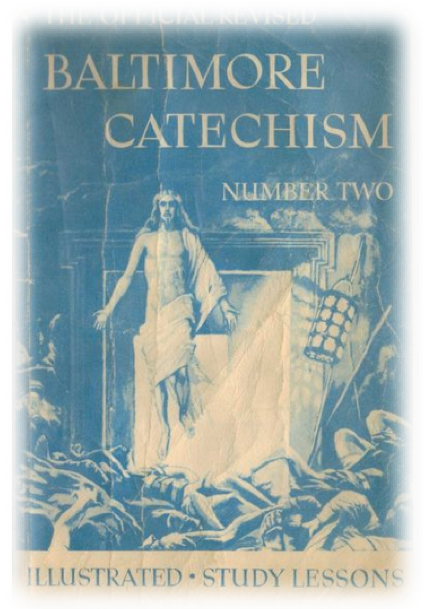
Lessons from the Baltimore Catechism

This is truly a question without bias, value, or finger wagging.  Who am I to judge?   The question may also be rhetorical because we all practice situational wellness. You know, wellness when it suits our needs and doesn’t interfere with our momentary whims.  And, while I’d like to think we have control over our every-moment behavior, we don’t.  That fact is very clear.  Just look around, better yet, think about your own behavior.  It’s part of our nature to periodically give in to Monkey Brain and BSOS (Bright Shiny Object Syndrome).  It’s a feature of our evolution.

This is a very important acknowledgement and admission.  Bodhis and Buddhas are rare where I come from and, my guess, where you live as well.

Join with me and repeat, “Unlike the Buddha, I practice situational wellness.”

This fact does not mean that we are weak, corrupt, inadequate, a bad person or the Anti-Buddha.  It means that we are human.  It means that we are imperfect.  I encourage you to embrace and celebrate your imperfection and that of others.  To do otherwise is to live a life of self-recrimination, denial, stress, shame, guilt, contradiction and duplicity.

Those who presume a higher plane of evolution tend to burst into flames.  Elmer Gantry is my name and hypocrisy is my game.

Before I go further, let me give you my definition of “wellness.”  I’ve presented this before but it’s important for this context.

well·ness, \ˈwel-nəs\: a dynamic objective and subjective progression toward a state of complete physical, intellectual, emotional, spiritual and social wellbeing and not merely the absence of disease or infirmity.  Incremental improvements can occur from pre-conception up to and including a person’s last breath

For the purpose of this essay, the key root words are “dynamic,”  “progress” and “increment.”  With wellness there is no end point, at least not in this lifetime.  Wellness is a paradoxical state wherein contentment of being and aspiration of becoming live in harmony.

Therefore it is not the independent act or goal that is the concern.  It is the understanding and intention (moral and ethical integrity) that separates the “saint” from the “sinner.”  Once again, it’s all about context.

1955, Sister Mary Wilma and The Baltimore Catechism

Bear with me as I take us back to the year 1955, SS Peter & Paul School on Cherry St. in Jamestown, New York.  Dogwood is in bloom, forthysias paint the backyard a bright yellow, my First Holy Communion is fast approaching (nifty white suit) and I have just reached the “Age of Reason.” This means that I am now morally responsible for my sins.  Hell could be my fate—will be my fate­—unless and until I understand, embrace and follow the teachings of the Baltimore Catechism.

When I was seven I was barely capable of remembering my phone number yet alone all those commandments.  However, that said, all these years later, I find some very good guidelines posted in that little blue book.  Whatever your religious or philosophical equivalent may be, it’s worth retrieving the moral teachings of your youth and see how they might be applied in your world, today.


What Would the Baltimore Catechism Say About “Wellness?”

Loosely interpreted, lesson 6 in the BC defines the existence of sin in terms of right or wrong, awareness and willful action.  Something has to be truly wrong, you must know it’s wrong and you must do it, anyway.  When these three criteria are met…you’ve sinned.   There’s also an order of seriousness of sin based upon how much damage it does to  your soul.  A sin can be material (didn’t know), venial (small) or mortal (really big deal).  Again, this is a loose interpretation.

So, in the world of wellness, you’re a “sinner” if:

  • There is evidence to support that the behavior you’re considering is — in any way — physically, emotionally or spiritually harmful to yourself or others.
  • You are well aware of the harm the behavior will cause.
  • You do it anyway.

Going back to context, if your intention is to do something you know to be harmful, you’ve compromised your integrity for the reward or the expediency of the moment.  It is this latter part…”for the moment” that makes all of us practitioners of situational wellness.

My message is not to preach: “STOP DOING IT!” That would be both naive and hypocritical on my part.  You’re going to continue “It” and so am I.  The issue is to make sure you’re not in denial with regard to harm and to be careful when it comes to triaging your “sins.”

Eat all the birthday cake you want, drink all the booze on Friday nights you choose, eat those “occasional” cheeseburgers to your heart’s content (or discontent), give children soda pop, fat and processed sugar and call it a “treat,” and smoke that celebratory cigar but just don’t tell yourself that you’re not a an avid follower of SW (situational wellness).

If, according to known science, something is harmful, all the spinning in the world won’t change the FACT that it is harmful.  Hey, I’m sorry but eating/serving jelly-filled donuts may be a venial sin compared to the mortal sin of deep-fried Snickers, however, they are both filled with known toxins and should be avoided if your intent is to stay on a path of wellness for you and those in your charge.

No judgment—I’m sure you’ll still go to heaven—I’m just sayin’… .  Be honest, that’s all. Oh, and be careful of using the “This-may-be-bad-for-my-body-but-every-once-in-awhile-it’s-good-for-my-spirit!” line.  As you well know this is a very slippery slope. Besides, 99% of the time, “This” can be replaced by something that won’t—if consumed as directed­—cause harm.

Avoiding the “Near Occasion” of Sin…

I also can hear the good Sister talk about the importance of having a firm purpose of sinning no more and to avoid near occasions of sin.  By near occasions of sin, BC means all the persons, places and things that may easily lead us into sin.  Something about “He who loves the danger will perish in it.”

The four kinds of occasions are:

  1. near occasions, through which we always fall
  2. remote occasions, through which we sometimes fall
  3. voluntary occasions, or those we can avoid
  4. involuntary occasions, or those we cannot avoid

Well, like I said, you and me, we’re gonna sin some more.  That’s a fact.  The issue here is, are you serious about avoiding unhealthy habits and actions…those you know to be harmful?  Or, for you, is their no paradox at all?   Doth thou protest too much about being with only a phantom aspiration toward becoming?  Important for you to figure out.

Meanwhile, those donuts sure look good.  Ah, what the hell, one can’t hurt.

________________________________________________________________

Let me suggest a personal mission statement for every SW practitioner (all of us) to consider:

My personal mission is to progressively and consistently achieve

measurably higher levels of physical, emotional, intellectual, and spiritual

awareness by living a life of integrity, curiosity, authenticity, compassion,

and dedication to the collective needs of all beings.

An On-Going Argument for Creating Healthy Cultures

Even if you adapt the above personal mission statement as your own, it’s not good enough.  We need help.  We need the help of the collective to protect the health of the individual.  I hope it’s clear by now that we are not good at self-monitoring.  Not pejorative, just good old observation sprinkled with brain science.  Rational thought plays second fiddle to random emotional reaction.  Schools, worksites, government and family structure must provide safe, secure environments that foster wellness (as described) while helping individuals avoid the “near occasion of sin.”  And, yes, this means no donuts at conferences, no sugar-treats at school functions, no candy bowls on desks and even (here comes the midwest heresy) no deep-fried Twinkies and Snickers at the State Fair!

________________________________________________________________

Michael

http://www.samuelsonwellness.com/

Complete Report Available: 10 Key Observations from 35 Years in the Field


There has been such a positive response to this series that I have put it into one report.  If you would like a full complementary PDF copy of the “10 Key Observations…” simply send me an email and I’ll send it to you within 24 hours.

Michael@SamuelsonWellness.com

Future listings will be under the heading of

Wellness 2.0

Random Observations from 35 Years in the Field

Next Posting:

“Do You Practice Situational Wellness?  No, Judgment…Just a Question”